
 Inicio
>
Noticias
>
Noticias corporativas
>
Oil Prices + Heatwaves | The Double Bill of Diesel Generation
Inicio
>
Noticias
>
Noticias corporativas
>
Oil Prices + Heatwaves | The Double Bill of Diesel Generation
An Inescapable "Double Squeeze"
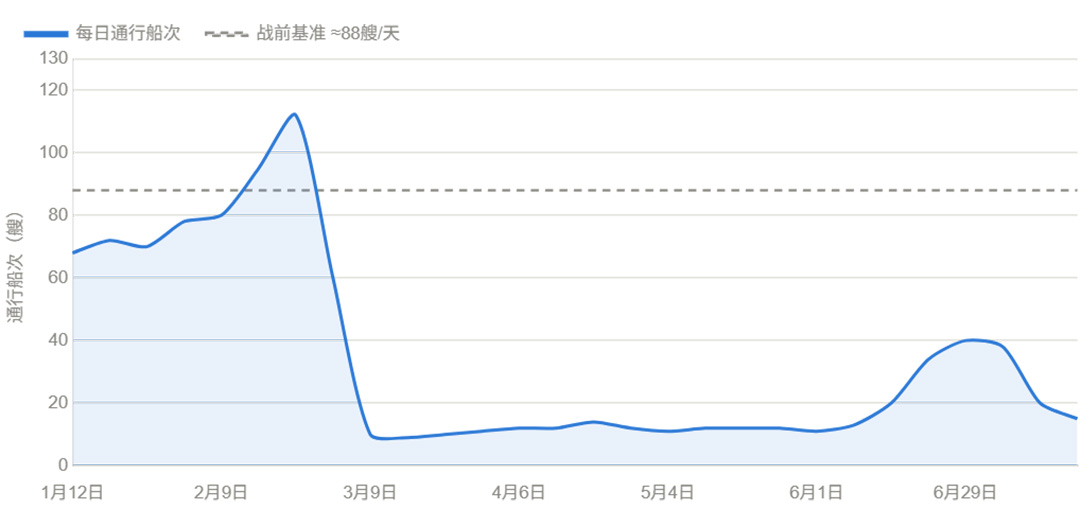
Vessel transits through the Strait of Hormuz (January–July 2026).
Source: IMF PortWatch (chokepoint6 dataset), as of July 19, 2026
This summer of 2026, two seemingly distant and unrelated macro events are very tangibly squeezing the survival space of tens of thousands of off-grid and weak-grid sites around the world. Whether on remote islands, at mining sites, or on construction sites, projects that once relied on diesel generators to keep running are all feeling unprecedented pressure.
On one side are soaring oil prices: with the Middle East's geopolitical situation swinging back and forth, the Strait of Hormuz—which carries roughly one-fifth of the world's oil shipments—has gone through closure, reopening, and closure again, sending crude prices on a violent "roller coaster."
On the other side is extreme heat: record-breaking heatwaves have not only driven cooling loads sharply higher but also directly caused diesel engines to derate when running in high temperatures. The result is obvious—at the very times and places where fuel is most expensive and transport is hardest, these sites are forced to burn even more diesel.
This is not a one-off black-swan event, but a structural trend that will persist for years to come.
The First Squeeze: Oil Prices, Repriced Day by Day at a Chokepoint
Over the past six months, the price movements of Brent crude have become almost a "real-time ECG" of the situation in the Strait of Hormuz.
●March: With the strait effectively closed by conflict, crude briefly surged to USD 112 per barrel, causing the largest oil-supply disruption on record; Gulf producers even cut output by roughly 10 million barrels a day as storage tanks overflowed.
●May: As the conflict continued, prices swung at high levels within the USD 100–115 range, hitting a year-to-date peak of USD 114.44 on May 4.
●June: A brief ceasefire pulled prices back to around USD 74.
●July: The situation escalated a second time. The Iranian Revolutionary Guard declared the strait "completely closed," and transit volumes briefly fell to zero; two Saudi tankers were then attacked in the Red Sea, extending the conflict to a second chokepoint. Oil prices rose in response—Brent closed at USD 94.13 on July 22, a six-week high, and approached USD 96 intraday on the 23rd.
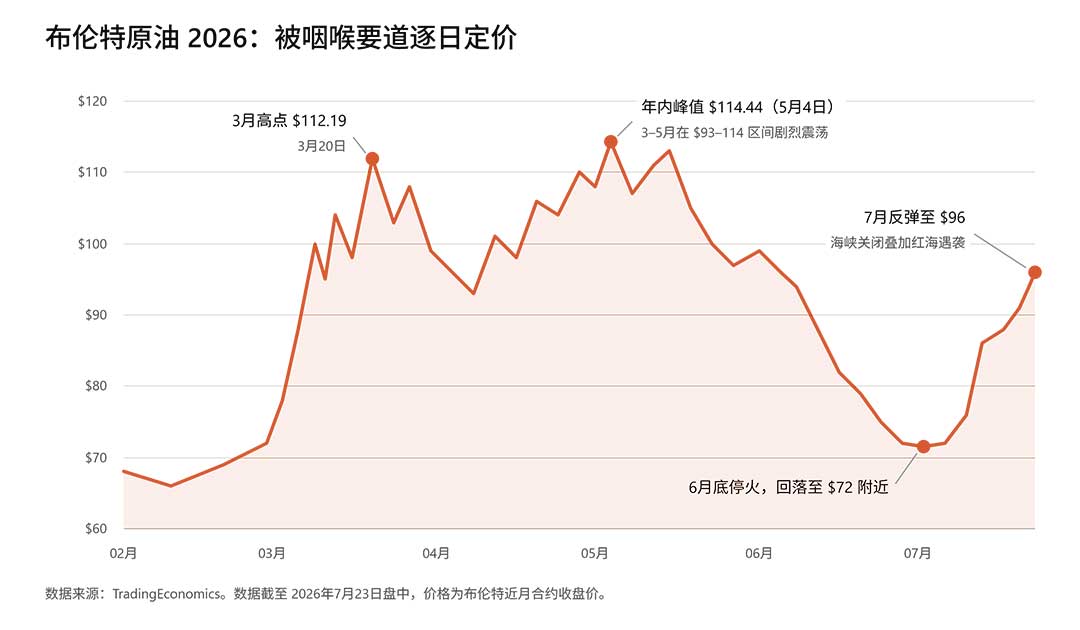
Brent crude — price trend, February–July 2026
For off-grid sites that depend heavily on diesel, this is an operating crisis—every liter of diesel is priced along this curve, on top of a transport premium that rises in step with distance and conflict.
The Second Squeeze: Heat, Making the Diesel Ledger Even Worse
The other end of the squeeze is the escalating challenge of heat. Heatwaves push up cooling demand, forcing diesel generators to run longer. A bigger risk follows: high temperatures cause diesel engines to derate—at the same load, the hottest part of the year demands more installed capacity and longer run times. The moment of peak diesel consumption lands exactly on the peak of oil prices.
Behind this lies an irreversible long-term climate trend: Europe is warming at more than twice the global average rate. The IEA forecasts that by 2050 the EU's stock of air conditioners could quadruple, and cooling has already become the fastest-growing component of building energy use.
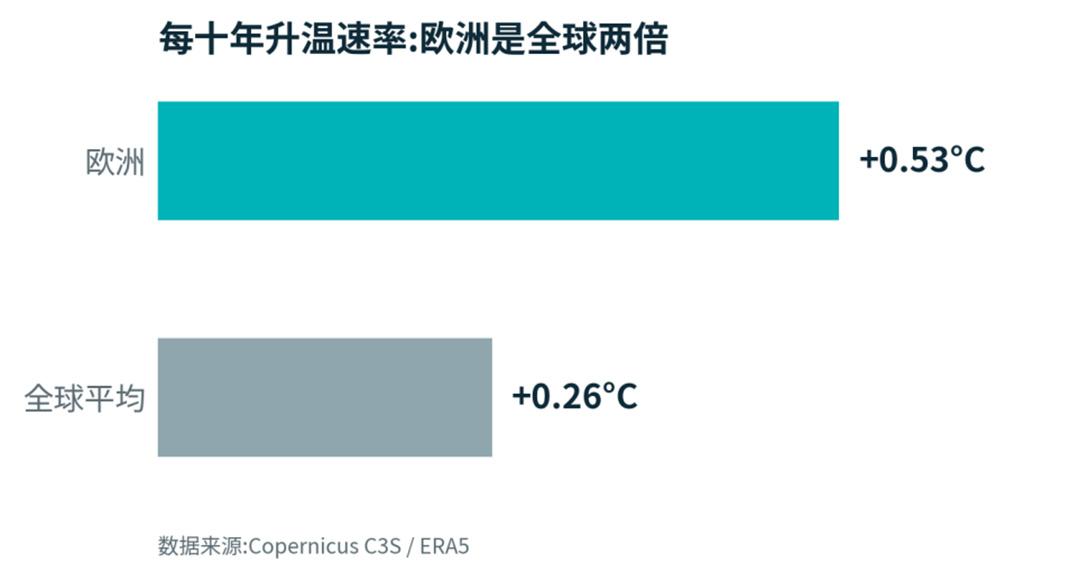
Europe's warming rate over the past decade
For off-grid operators, breaking free from sole reliance on diesel is no longer a short-term hedge against a single hot summer—it is a structural cost decision.
Recalculating the Numbers: The Economics Delivered by Diesel-Storage Hybrids
Oil-price risk cannot be "engineered" out of a diesel engine; the real way out is systemic substitution—deploying new-energy generation and storage on-site. Laid out plainly, the levelized cost of electricity (LCOE) for off-grid diesel generation is typically as high as about USD 0.65 per kWh, several times that of grid power; and the largest and most reducible slice of that cost is fuel.
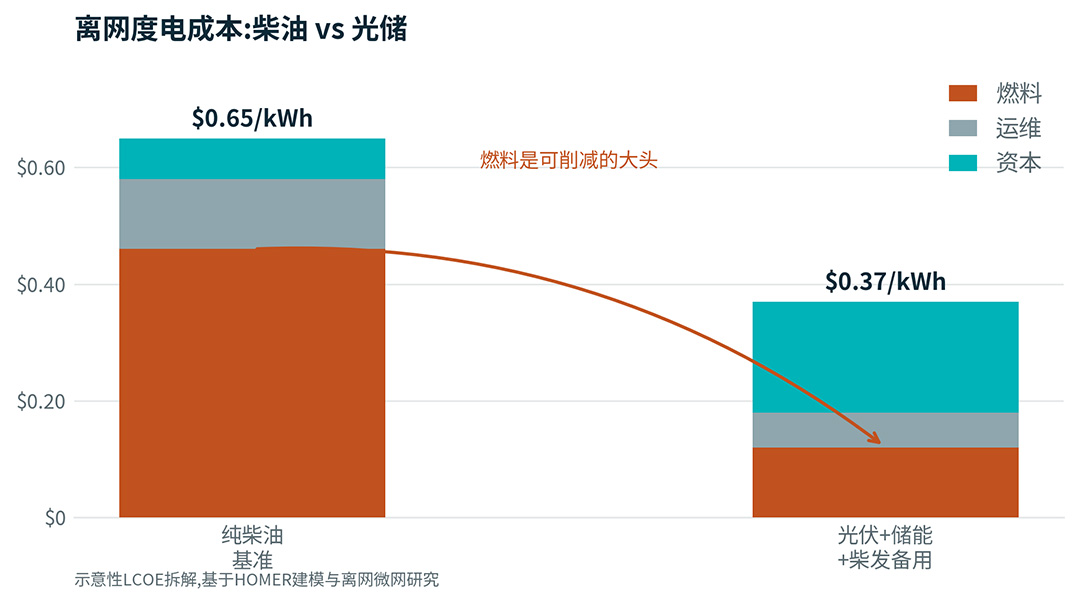
Off-grid levelized cost of electricity (LCOE) comparison
Once PV and energy-storage systems are introduced, fuel costs are dramatically compressed and the overall cost of electricity drops off a cliff. At the core of keeping this "PV + storage + diesel backup" architecture running stably is the SiC (silicon-carbide) grid-forming converter.
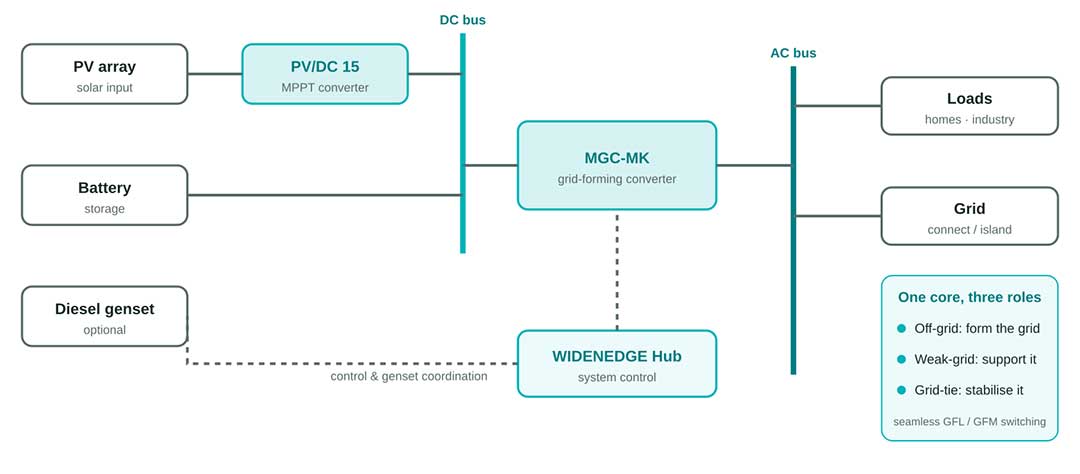
WidenEdge grid-forming microgrid system architecture
Real-World Test in Guangzhou: How Does Storage Help "Lighten the Load" on Diesel Gensets?
The most typical pain points on industrial sites often come from load surges caused by motor start-ups, production-line switching, and the starting and stopping of large equipment. These surges impose severe transient stress on diesel gensets, forcing them to start and stop frequently—or even to idle inefficiently for long stretches, "running while ailing."
Take a construction-site microgrid project in Guangzhou as an example: a 300 kW / 150 kWh energy-storage system was deployed on-site, driven by two 150 kW grid-forming PCS units. Faced with sudden load steps, the system responded within milliseconds, smoothing the power fluctuations before they reached the diesel genset. The genset was thus able to run closer to its optimal efficiency point:
●reducing unnecessary frequent start-stops;
●avoiding the physical damage of low-load and overload operation;
●delivering a smoother power output.
The result of storage working in concert with the diesel genset is not only improved fuel efficiency, but also a simultaneous improvement in operating flexibility and in the full-lifecycle lifespan of core equipment.
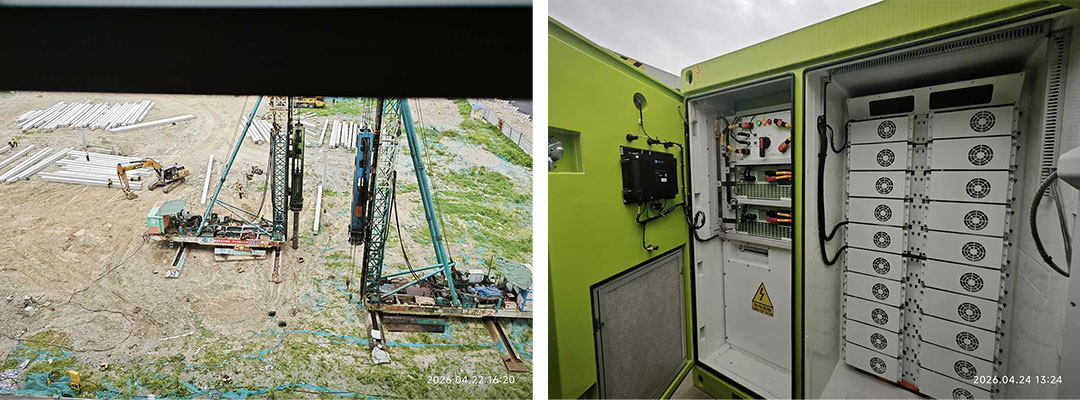
WidenEdge Guangzhou project
This "double squeeze" of 2026 is by no means a brief anomaly, but a stark preview for the industry. As cooling demand and climate volatility keep climbing together, every liter of diesel saved and every load surge absorbed by a diesel-storage hybrid system will be more commercially valuable than ever before.
Return